 DriveFinch
South Carolina DMV Practice Test 2026
25 free questions for the South Carolina written permit test. Choose an answer to see right away whether it is correct and why. No sign-up.
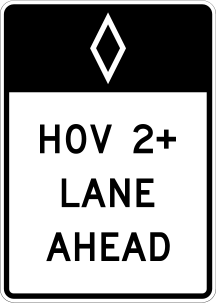
What does this sign tell drivers using a carpool or bus lane?
All 25 questions with answers
Open a question to see the correct answer and the explanation.
What does this sign tell drivers using a carpool or bus lane?
- The special-use lane restriction is only just now beginning
- The lane is now closed to all vehicles
- The special-use lane restriction ends at this point
- The toll rate for the lane has changed
Correct answer: The special-use lane restriction ends at this point. This sign marks the point where the preferential lane restriction ends, after which the lane can be used by regular traffic.
Source: MUTCD 2009 Part 2B
How far before a turn must a South Carolina driver begin signaling?
- At least 50 feet
- At least 300 feet
- At least 100 feet
- At least 20 feet
Correct answer: At least 100 feet. The 100-foot rule gives other drivers enough warning before a turn begins.
Source: South Carolina Driver Handbook, p.61, 101, Traffic Signals / Turn Signals
How far from the curb or road edge may a vehicle be parked in South Carolina?
- No more than 6 inches
- No more than 18 inches
- No more than 36 inches
- Exactly against the curb, with no gap allowed
Correct answer: No more than 18 inches. South Carolina sets 18 inches as the maximum gap allowed between a parked vehicle and the curb.
Source: South Carolina Driver Handbook, p.85, 122, Parking / Move-Over Law / Safety Belts
As you approach a work zone, orange cones gradually shift traffic from your lane into an adjacent lane. What should you do?
- Merge into the indicated lane well before reaching the cones
- Wait until the last cone to merge
- Drive over the cones if traffic is light
- Stop and wait for a flagger even if none is present
Correct answer: Merge into the indicated lane well before reaching the cones. Merging early and smoothly, before reaching the taper of cones, is safer than waiting until the last moment to change lanes.
Source: Texas Driver Handbook, PDF p.35, Construction and Maintenance Devices
A South Carolina driver combines alcohol with an over-the-counter medication and has a BAC of 0.05 percent. What does the handbook say can happen?
- No conviction is possible below 0.08 percent
- Only a warning is issued
- The driver automatically passes any roadside sobriety test
- The driver can still be convicted of impaired driving
Correct answer: The driver can still be convicted of impaired driving. Combining alcohol with certain drugs can support a conviction even at a lower measured BAC than the usual adult threshold.
Source: South Carolina Driver Handbook, p.37, Alcohol and the Law
Between 6 a.m. and midnight, who may ride along with a South Carolina beginner's permit holder?
- Any licensed driver at all, no matter their age or experience level
- A licensed driver at least 21 years old, with a full year of driving experience already
- A sibling who is already at least 18 years old and licensed
- No supervision at all is ever required during daytime hours
Correct answer: A licensed driver at least 21 years old, with a full year of driving experience already. Daytime supervision requires a licensed adult of at least 21 who already has a year of driving under their belt.
Source: South Carolina Driver Handbook, p.9-10, Beginner's Permit
Under South Carolina's primary seat belt law, when can an officer stop a driver for a seat belt violation?
- Only if the driver has already been legally stopped for some other separate offense
- Only during checkpoints that are specifically scheduled just for seat belts
- Just from a clear view of an unbuckled driver or passenger, without any other violation needed
- Only if a passenger in the vehicle happens to be under the age of 12
Correct answer: Just from a clear view of an unbuckled driver or passenger, without any other violation needed. Under a primary law, the seat belt violation alone is enough reason for the stop.
Source: South Carolina Driver Handbook, p.85, 122, Parking / Move-Over Law / Safety Belts
What is this warning sign telling drivers about the road ahead?
- Golf carts may cross the road ahead
- Slow-moving farm equipment may enter the road ahead
- Trucks frequently enter or cross the road at a point ahead
- Horseback riders may be using or crossing the road ahead
Correct answer: Golf carts may cross the road ahead. This warning sign means golf carts may cross the road ahead. Be ready to react safely as you approach this part of the road.
Source: MUTCD 2009 Sec. 2C (Warning Signs)
If you cannot get your disabled vehicle completely off the road, what should you do to warn approaching traffic?
- Nothing additional is needed at all if your hazard flashers are already turned on and working
- Stand out in the middle of the road behind the vehicle, waving both arms wildly at oncoming traffic
- Set out warning devices like flares or triangles, and make sure it can be seen from a distance
- Turn off all of your lights completely so you do not distract other passing drivers
Correct answer: Set out warning devices like flares or triangles, and make sure it can be seen from a distance. Place emergency flares or warning triangles behind the vehicle to give approaching drivers time to react, and try to position the vehicle so it can be seen from a distance in both directions.
Source: California Driver Handbook, Horn, Headlights, and Emergency Signals, p.75 (2020 handbook PDF): "Place emergency flares or triangles 200-300 feet behind the vehicle"
Why do highway authorities create HOV (carpool) lanes on congested highways?
- To provide extra parking during rush hour traffic.
- To encourage carpooling and cut vehicle numbers.
- To keep trucks separated from passenger cars.
- To create a lane used only by emergency crews.
Correct answer: To encourage carpooling and cut vehicle numbers.. HOV lanes reward vehicles carrying multiple occupants with a faster lane, which encourages carpooling and helps reduce the total number of vehicles on congested roads.
Source: California Driver Handbook, Lane Control-Carpool/HOV Lanes p.58
You are driving and see that the car ahead of you has stopped at a crosswalk to let a pedestrian cross. What should you do?
- Pass the stopped car since no one seems to be crossing
- Stop too, since a pedestrian may be hidden from view
- Honk to let the driver know they can proceed
- Drive around using the shoulder to get past
Correct answer: Stop too, since a pedestrian may be hidden from view. If a vehicle ahead of you is stopped at a crosswalk, there may be a pedestrian crossing that you cannot see from your position. Never pass a vehicle stopped at a crosswalk.
Source: California Driver Handbook, Traffic Controls section, pedestrian safety graphic, p.91 (2020 handbook PDF)
On a multi-lane road, why should slower-moving traffic generally stay in the right-hand lanes?
- So faster traffic can pass safely on the left.
- The right lanes are reserved for parking only.
- It has no real purpose but is a tradition.
- Right lanes are always wider.
Correct answer: So faster traffic can pass safely on the left.. Keeping slower traffic to the right lets faster vehicles pass on the left in a predictable way, which keeps traffic flowing more smoothly and safely.
Source: Texas Driver Handbook, Ch9 Highway Driving p.47 (keep right except to pass)
A yellow diamond sign showing a plus/cross shape tells drivers what is ahead?
- A railroad crossing
- A four-way (crossroad) intersection
- A hospital
- A dead end
Correct answer: A four-way (crossroad) intersection. This sign warns that a crossroad intersection is coming up, where traffic may enter from both the left and right.
Source: Texas Driver Handbook, PDF p.36, Diamond warning shape used for intersection signs
At what BAC does a South Carolina driver under 21 face an immediate suspension of at least three months?
- 0.05 percent or higher
- 0.08 percent or higher
- 0.02 percent or higher
- 0.10 percent or higher
Correct answer: 0.02 percent or higher. For drivers under 21, the zero-tolerance threshold sits at 0.02 percent, with an immediate suspension of at least three months.
Source: South Carolina Driver Handbook, p.37, Alcohol and the Law
You are turning left at an intersection and a car is coming straight toward you from the opposite direction. Who must yield?
- You may turn first if you signal early
- The car going straight has the right to go first
- Whoever arrived first must go, regardless of direction
- The larger vehicle has the right-of-way
Correct answer: The car going straight has the right to go first. A driver turning left must yield to oncoming traffic that is going straight through the intersection, even without a stop sign or light.
Source: Texas Driver Handbook, PDF p.26, Turning Left
Which statement best describes how alcohol affects a driver's ability to judge distance and react to hazards?
- It has absolutely no effect at all on driving until a BAC reaches the full legal limit
- It slows reaction time and makes judging the speed and distance of vehicles harder
- It only affects a driver's night vision and has no real impact on daytime driving at all
- It actually improves reaction time by making the driver feel more alert
Correct answer: It slows reaction time and makes judging the speed and distance of vehicles harder. Alcohol is a depressant that slows the brain's processing speed, so a driver reacts later to hazards and misjudges how fast other vehicles are approaching.
Source: California Driver Handbook, Alcohol and Drugs-Alcohol/Drugs and Driving Is Dangerous p.100 - 'Impaired judgment...affects how you react to sounds and what you see.'
Your vehicle begins to skid on an icy road. What is the correct way to regain control?
- Brake hard immediately to stop the skid
- Accelerate to power out of the skid
- Ease off the gas pedal and steer in the direction the vehicle is skidding
- Turn the steering wheel opposite the direction of the skid
Correct answer: Ease off the gas pedal and steer in the direction the vehicle is skidding. To recover from a skid, ease off the accelerator, stop braking, and steer in the direction the vehicle is sliding until you regain control, then straighten the wheels.
Source: California Driver Handbook, Handling Emergencies-Skids on Slippery Surfaces, p.105 (2020 handbook PDF)
Above a multi-lane road, a steady green arrow pointing down over your lane means what?
- That lane is closed to all traffic
- You must exit at the next ramp
- Prepare to stop, the lane is closing soon
- You may drive in that lane
Correct answer: You may drive in that lane. A green arrow above a lane means that lane is open and you may use it.
Source: Florida Driver Handbook, PDF p.60, Green Arrow: you may use this lane
In South Carolina, a driver under the age of 21 can be penalized under that state's underage ('zero tolerance'-style) alcohol law once their BAC reaches:
- 0.00%
- 0.02%
- 0.04%
- 0.08%
Correct answer: 0.02%. Because underage drinking and driving is treated so strictly, South Carolina sets the under-21 BAC threshold at 0.02%, well below the adult limit.
When an oncoming vehicle is approaching at night, within how many feet should you switch from high beams to low beams in South Carolina?
- 200 feet
- 500 feet
- 100 feet
- 750 feet
Correct answer: 500 feet. In South Carolina, you must dim your high beams to low beams within 500 feet of an oncoming vehicle so you do not blind the other driver.
A driver uses a hands-free device to talk on the phone while driving, keeping both hands on the wheel. Is this free of distraction risk?
- No, the conversation itself is still a cognitive distraction
- Yes, hands-free phone calls carry no distraction risk at all
- Yes, but only if the call lasts under one minute
- No, but only because the phone's screen stays lit
Correct answer: No, the conversation itself is still a cognitive distraction. Talking on a phone is listed as a common driving distraction whether or not the device is handheld, because the conversation itself pulls the driver's mind away from the road. Hands-free devices reduce manual distraction but not cognitive distraction.
Source: Florida Driver Handbook, Distracted Driving-Categories of Distraction, p.42
You are driving on a two-lane road with no median or physical barrier (an undivided road). A school bus ahead has stopped, its red lights are flashing, and its stop arm is out. What must you do?
- Only stop if you are behind the bus; oncoming traffic may proceed
- Slow down and pass carefully
- Stop only if children are visible outside the bus
- Stop, regardless of which direction you are traveling
Correct answer: Stop, regardless of which direction you are traveling. On an undivided road, traffic in both directions must stop for a school bus displaying flashing red lights and an extended stop-arm, and must remain stopped until the lights stop flashing.
Source: Florida Driver Handbook, Ch3/Sharing the Road-School Buses, p.97: "On a two-way street or highway, all drivers moving in either direction must stop"
What condition or hazard is coming up when you see this sign?
- The road ahead becomes a divided highway with a median separating the opposing traffic
- You are entering a three-lane road ahead where the center lane is shared by traffic from both directions
- You are entering a section of road ahead where traffic travels in both directions on the same roadway
- The divided highway ends ahead, and you will share the road with oncoming traffic
Correct answer: You are entering a section of road ahead where traffic travels in both directions on the same roadway. This yellow diamond sign warns that you are entering a section of road ahead where traffic travels in both directions on the same roadway. Slow down and adjust your driving to handle it safely.
Source: MUTCD 2009 Sec. 2C (Warning Signs)
What should you expect on the road after seeing this sign?
- There is an extremely sharp curve ahead, almost doubling back on itself
- There are two moderate curves ahead in opposite directions, one right after the other
- A sharp curve and an intersection are located at almost the same point ahead
- There is a series of three or more curves ahead on the road
Correct answer: There is a series of three or more curves ahead on the road. Seeing this sign means there is a series of three or more curves ahead on the road. Drivers should reduce speed and stay alert for this condition.
Source: MUTCD 2009 Sec. 2C (Warning Signs)
As you begin a right turn at an intersection, a pedestrian is stepping off the curb into the crosswalk in your path. What should you do?
- Complete the turn quickly before they step off the curb.
- Sound the horn and keep turning as you were.
- Turn wide around them without stopping at all.
- Stop and wait for them to finish crossing.
Correct answer: Stop and wait for them to finish crossing.. A pedestrian already stepping into the crosswalk has the right-of-way; a driver turning must stop and wait for them to cross safely before completing the turn.
Source: California Driver Handbook, Pedestrians p.47 (yield when turning)
South Carolina permit test: common questions
How many questions are on the South Carolina permit test?
We could not verify a fixed question count or passing score for South Carolina. Check the official handbook before your test.
Are these the real South Carolina test questions?
No. They are practice questions that cover the same topics: traffic laws, road signs and safe driving. The real test is set by South Carolina Department of Motor Vehicles (SCDMV).
Is this practice test free?
Yes. There is nothing to sign up for. The DriveFinch app has the full question bank, works offline and is free (one small banner ad).
Practice tests for other states
- Alabama
- Alaska
- Arizona
- Arkansas
- California
- Colorado
- Connecticut
- Delaware
- District of Columbia
- Florida
- Georgia
- Hawaii
- Idaho
- Illinois
- Indiana
- Iowa
- Kansas
- Kentucky
- Louisiana
- Maine
- Maryland
- Massachusetts
- Michigan
- Minnesota
- Mississippi
- Missouri
- Montana
- Nebraska
- Nevada
- New Hampshire
- New Jersey
- New Mexico
- New York
- North Carolina
- North Dakota
- Ohio
- Oklahoma
- Oregon
- Pennsylvania
- Rhode Island
- South Dakota
- Tennessee
- Texas
- Utah
- Vermont
- Virginia
- Washington
- West Virginia
- Wisconsin
- Wyoming