 DriveFinch
New York DMV Practice Test 2026
25 free questions for the New York written permit test. Choose an answer to see right away whether it is correct and why. No sign-up.
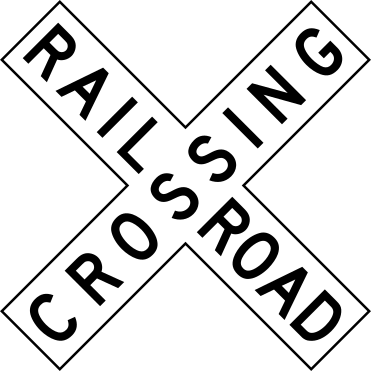
You are approaching a railroad crossing marked only with a crossbuck sign (no gates or lights). You see a train coming, so you must stop. How far from the nearest rail should you stop, at minimum, in New York?
All 25 questions with answers
Open a question to see the correct answer and the explanation.
You are approaching a railroad crossing marked only with a crossbuck sign (no gates or lights). You see a train coming, so you must stop. How far from the nearest rail should you stop, at minimum, in New York?
- 100 feet
- 25 feet
- 15 feet
- 10 feet
Correct answer: 15 feet. Even at a passive crossing marked only with a crossbuck sign, you must stop at least 15 feet from the nearest rail in New York when a train is approaching.
You are approaching a reversible center lane and are not sure which direction it is currently open for. What should you do?
- Enter the lane anyway, since it sits in the center
- Follow whichever car is ahead of you into that lane
- Check the overhead signal before entering the lane
- Assume the lane always flows toward downtown areas
Correct answer: Check the overhead signal before entering the lane. Because a reversible lane's direction changes with the overhead signal, you should confirm the current direction before entering, rather than guessing.
Source: California Driver Handbook, Lane Control, reversible lane
When you plan to turn right at an upcoming intersection, which lane should you usually move into ahead of time?
- The lane closest to the right edge of the road
- The center lane, since it works for any turn
- It does not matter which lane you happen to use
- The lane farthest away from the curb edge
Correct answer: The lane closest to the right edge of the road. Getting into the rightmost lane early keeps your path predictable and out of the way of drivers going straight or turning left from a different lane.
Source: California Driver Handbook, Turns p.62
You arrive at a crosswalk and the pedestrian signal shows a steady, non-flashing DON'T WALK (or a steady raised hand). What should you do?
- Wait; do not begin crossing
- Cross quickly before traffic arrives
- Cross only if no cars are visible
- Cross if you are in a hurry
Correct answer: Wait; do not begin crossing. A steady DON'T WALK signal means it is not legal to begin a new crossing; a pedestrian should wait for the WALK signal.
Source: California Driver Handbook, PDF p.42, Walk or Walking Person means it is legal to cross
A flagger in a work zone holds up this orange side of a paddle sign. What does it tell drivers to do?
- Stop the vehicle completely and turn off the engine right away
- Speed up to clear the work zone
- Slow down and proceed carefully as directed
- Turn around and use a different road
Correct answer: Slow down and proceed carefully as directed. This is the SLOW side of the flagger's stop/slow paddle. It tells drivers to reduce speed and proceed carefully through the work zone rather than stop.
Source: MUTCD 2009 Part 6E
You are driving on a multi-lane road and see a vehicle stopped on the shoulder with flashing warning lights (for example, a police car or tow truck assisting a breakdown). If you can safely do so, what does a move-over law generally require?
- Ignore it completely since it's not in your lane
- Stop your vehicle next to it to offer help
- Move over a lane, or slow down if you cannot
- Turn on your high beams to see better
Correct answer: Move over a lane, or slow down if you cannot. Move-over laws generally require drivers to move over a lane away from a stopped vehicle displaying warning lights, or to slow down if changing lanes is not possible.
Source: New York Driver Handbook, Ch3-Move Over Law, p.35
Besides the usual dusk-to-dawn requirement, New York law requires headlights to be turned on in which other situation?
- Only when driving on a limited-access expressway or interstate highway system anywhere statewide
- Only when the vehicle is legally parked overnight at a curb
- Whenever weather conditions require using your windshield wipers, for rain, snow, sleet, or fog
- Only when the vehicle is carrying one or more passengers
Correct answer: Whenever weather conditions require using your windshield wipers, for rain, snow, sleet, or fog. New York law requires headlights whenever weather conditions - rain, snow, sleet, or fog - require you to run your windshield wipers, regardless of the time of day.
Source: New York Driver Handbook, p.63, DRIVING IN RAIN, FOG OR SNOW
According to state driver handbooks, who is generally required to wear a seat belt while a vehicle is in motion?
- The driver and passengers, as defined by the state's seat belt law
- Only the driver behind the wheel, no matter who else is riding along
- Only front-seat occupants, never anyone riding in the back seat
- Only passengers under the age of 12 sitting anywhere in the vehicle
Correct answer: The driver and passengers, as defined by the state's seat belt law. Seat belt laws generally require both the driver and covered passengers to buckle up, though the exact scope (all seats vs. front only) can vary by state.
Source: California Driver Handbook, Occupant Protection-Seat Belts p.27 - 'You and your passengers must wear seat belts...You can get a ticket if you do not.'
A New York school district uses a stop-arm camera to record a vehicle passing a stopped school bus, without an officer present. The ticket goes to the registered vehicle owner. Why?
- Stop-arm camera tickets are frequently challenged in court and are very rarely upheld under New York law
- Only the school bus company itself can be fined, never the registered vehicle owner
- Stop-arm cameras may legally be used only on interstate highways, not local roads
- A 2019 law lets school districts and municipalities fine the vehicle's owner using stop-arm camera footage
Correct answer: A 2019 law lets school districts and municipalities fine the vehicle's owner using stop-arm camera footage. A 2019 New York law authorizes school districts and municipalities to use stop-arm camera footage to issue civil penalties directly to the vehicle's registered owner.
Source: New York Driver Handbook, p.41, stop-arm cameras
Besides license consequences, what else can happen if a driver refuses a chemical test after a DWI arrest in New York?
- The refusal automatically dismisses the underlying DWI charge entirely
- Refusal has no effect on the criminal case at all, only on the license
- The refusal itself can be brought up as evidence when the driver is tried on the DWI charge
- Refusal automatically upgrades the entire charge to a much more serious federal criminal offense
Correct answer: The refusal itself can be brought up as evidence when the driver is tried on the DWI charge. Prosecutors are allowed to mention the refusal itself as evidence during the trial on the underlying alcohol or drug-related charge.
Source: New York Driver Handbook, p.56, Chemical Tests
True or False: In New York, drivers under 18 face a stricter cell phone ban than adult drivers, going beyond the state's general handheld-phone or texting rules.
- False
- True
Correct answer: False. Whether New York has an extra, stricter phone rule specifically for drivers under 18 is: False.
If there is no curb, which way should you turn your front wheels when parked on a hill?
- Toward the center, into oncoming traffic
- Straight ahead only, regardless of slope
- It doesn't matter at all without a curb
- Toward the edge, so it rolls off safely
Correct answer: Toward the edge, so it rolls off safely. Without a curb to stop the wheel, angling the wheels toward the road's edge means the car would roll off the road away from traffic if the brakes failed, rather than into travel lanes.
Source: California Driver Handbook, Parking-Parking on a Hill p.68 (no curb: turn wheels toward the shoulder)
After successfully parallel parking in New York, how far from the curb should your wheels end up, at most?
- Five feet
- Six inches exactly
- One foot (about 30 cm)
- There is no maximum distance
Correct answer: One foot (about 30 cm). Once you're done parking, the gap between your wheels and the curb should not exceed one foot, or about 30 cm.
Source: New York Driver Handbook, p.42, How to Park
Why do states require young children to ride in a car seat or booster seat instead of just using the vehicle's regular seat belt?
- Car seats are only ever legally required for infants younger than 6 months of age
- It is only a general recommendation, not an actual legal requirement, in any single state
- A standard seat belt is not designed to fit or protect a child until a certain age, weight, or height
- Seat belts fit and protect children and adults exactly the same, so a car seat is just extra precaution
Correct answer: A standard seat belt is not designed to fit or protect a child until a certain age, weight, or height. A regular seat belt is sized for an adult body - a young child needs a car seat or booster until they are tall and heavy enough for the belt to sit correctly across their hips and shoulder.
Source: California Driver Handbook, Occupant Protection-Child Restraint System p.27 - 'Children under 8 years old, or who are less than 4 feet 9 inches tall, must be properly secured in a…
This sign shows a single black arrow on a horizontal sign. What is it telling drivers?
- Traffic on that street moves only in the direction shown
- Traffic can move in either direction
- The street is closed ahead
- Parking is allowed only along the direction that is shown
Correct answer: Traffic on that street moves only in the direction shown. A one-way sign shows the single direction traffic is allowed to travel on that street; entering against the arrow is prohibited.
Source: MUTCD 2009 Sec. 2B.40
At a four-way stop, which vehicle should proceed through the intersection first?
- The vehicle that stopped first
- The vehicle turning left at the intersection
- The vehicle positioned on the left
- Whichever vehicle is the largest in size
Correct answer: The vehicle that stopped first. Vehicles at an all-way stop proceed in the order they arrived; the first vehicle to stop is the first to go.
Source: Florida Driver Handbook, PDF p.55, All Way Stop
A driver in New York is convicted of illegally passing a stopped school bus for the third time within three years. What is one consequence they face?
- Nothing beyond the fine for the very first offense
- They receive a warning letter only
- A revocation of their license kicks in, lasting six months at minimum
- Their vehicle registration is automatically renewed a full year early
Correct answer: A revocation of their license kicks in, lasting six months at minimum. A third such conviction within a three-year span brings a license revocation lasting six months or longer, in addition to the fines already owed.
Source: New York Driver Handbook, p.40, School Buses (fine and revocation)
A blue sign along the highway most likely indicates what?
- A warning about changing road conditions ahead
- A regulatory speed limit for that road
- A nearby service such as gas, food, or a hospital
- A recreational area such as a park or nature preserve
Correct answer: A nearby service such as gas, food, or a hospital. Blue signs point drivers toward services such as fuel, food, lodging, or hospitals.
Source: New York Driver Handbook, service signs are blue with white letters
A driver crosses a double solid yellow line to pass a slow-moving vehicle because no other traffic is visible at that moment. What is wrong with this?
- Nothing; it is legal whenever the road looks totally clear
- Double solid yellow lines ban passing in either direction
- It is only illegal to do this after dark at night
- It is only illegal to do this near an intersection
Correct answer: Double solid yellow lines ban passing in either direction. Two solid yellow lines mean passing is prohibited for traffic moving in either direction, regardless of how clear the road appears at that moment.
Source: California Driver Handbook, PDF p.41, two solid yellow lines indicate no passing
True or False: In New York, it is illegal for a driver of ANY age to hold a phone to their ear and talk while driving - not just to text.
- False
- True
Correct answer: True. In New York, a general statewide ban on holding a phone to talk while driving is: True. Hands-free rules can still differ from texting rules.
This yellow pennant-shaped sign is warning drivers about what?
- The road ahead has no outlet; the arrow on the sign shows its direction
- The road ahead is a dead end; the arrow on the sign shows the direction it ends
- You are entering a no-passing zone; this pennant-shaped sign is the only one of its shape
- The road ahead ends completely with no way through, so you must turn around
Correct answer: You are entering a no-passing zone; this pennant-shaped sign is the only one of its shape. This yellow pennant sign warns that you are entering a no-passing zone; this pennant-shaped sign is the only one of its shape. Slow down and adjust your driving to handle it safely.
Source: MUTCD 2009 Sec. 2C (Warning Signs)
A parent is helping their teen log supervised driving hours in New York before the road test. How many total hours of practice does the state generally require?
- 50 hours
- 30 hours
- 20 hours
- 10 hours
Correct answer: 50 hours. New York generally requires 50 total supervised hours logged before a young driver can take the road test.
On a long road trip, what is a recommended way to reduce the risk of drowsy driving before it becomes dangerous?
- Always drive alone so no one else is put at risk
- Travel with a companion and switch drivers when one starts feeling tired
- Keep driving through tiredness since stopping wastes time
- Drive only at night when roads are quieter
Correct answer: Travel with a companion and switch drivers when one starts feeling tired. Traveling with a companion and switching drivers when one starts to feel drowsy, sometimes called the 'buddy system,' is a recommended way to prevent fatigue from building up to a dangerous level.
Source: California Driver Handbook, Fatigued or Drowsy Driving, p.99 (2020 handbook PDF)
In New York, a driver operating a vehicle that requires a commercial driver's license (CDL) is considered intoxicated once their BAC reaches:
- 0.04%
- 0.10%
- 0.05%
- 0.01%
Correct answer: 0.04%. Commercial drivers in New York are held to a stricter BAC standard of 0.04%, lower than the standard adult limit, because of the added responsibility of operating large vehicles.
Which of these matches the following-distance guideline given in the New York handbook for normal conditions?
- 6 seconds
- 1 second
- 9 seconds
- 2 seconds
Correct answer: 2 seconds. New York teaches a minimum following gap of 2 seconds in good conditions, measured using a fixed roadside point.
New York permit test: common questions
How many questions are on the New York permit test?
20 questions, pass with 14 correct.
Are these the real New York test questions?
No. They are practice questions that cover the same topics: traffic laws, road signs and safe driving. The real test is set by New York State Department of Motor Vehicles (DMV).
Is this practice test free?
Yes. There is nothing to sign up for. The DriveFinch app has the full question bank, works offline and is free (one small banner ad).
Practice tests for other states
- Alabama
- Alaska
- Arizona
- Arkansas
- California
- Colorado
- Connecticut
- Delaware
- District of Columbia
- Florida
- Georgia
- Hawaii
- Idaho
- Illinois
- Indiana
- Iowa
- Kansas
- Kentucky
- Louisiana
- Maine
- Maryland
- Massachusetts
- Michigan
- Minnesota
- Mississippi
- Missouri
- Montana
- Nebraska
- Nevada
- New Hampshire
- New Jersey
- New Mexico
- North Carolina
- North Dakota
- Ohio
- Oklahoma
- Oregon
- Pennsylvania
- Rhode Island
- South Carolina
- South Dakota
- Tennessee
- Texas
- Utah
- Vermont
- Virginia
- Washington
- West Virginia
- Wisconsin
- Wyoming