 DriveFinch
Hawaii DMV Practice Test 2026
25 free questions for the Hawaii written permit test. Choose an answer to see right away whether it is correct and why. No sign-up.

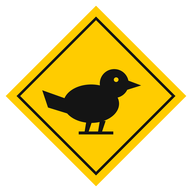
What does this warning sign mean for drivers approaching it?
All 25 questions with answers
Open a question to see the correct answer and the explanation.
What does this warning sign mean for drivers approaching it?
- The road ahead has loose gravel, reducing tire grip
- The shoulder ends ahead
- The road ahead becomes especially slippery when it is wet
- The shoulder ahead is lower than the surface of the road
Correct answer: The road ahead has loose gravel, reducing tire grip. This warning sign means the road ahead has loose gravel, reducing tire grip. Be ready to react safely as you approach this part of the road.
Source: MUTCD 2009 Sec. 2C (Warning Signs)
Why does a steady green light not guarantee that the intersection is completely clear?
- Because green lights sometimes malfunction or break
- Because green lights only apply to the far right lane
- Because green lights change too fast to be fully reliable
- Because someone still crossing legally may not be clear yet
Correct answer: Because someone still crossing legally may not be clear yet. A green light allows you to proceed, but anyone who legally entered the intersection while it was still clear to do so may still be finishing crossing, and you must yield to them.
Source: California Driver Handbook, PDF p.41-42, Solid Green: give right-of-way to any vehicle, bicyclist, or pedestrian still in the intersection
This round yellow sign is posted before a railroad crossing. What is it warning drivers about?
- The railroad crossing ahead has been permanently removed and closed
- A railroad crossing is ahead; slow down and prepare to stop if needed
- A train station is ahead with parking available
- The road curves sharply just past the tracks
Correct answer: A railroad crossing is ahead; slow down and prepare to stop if needed. This is the advance warning sign for a railroad crossing, giving drivers time to slow down before reaching the tracks.
Source: MUTCD 2009 Sec. 8B.06
If you pick a fixed roadside marker, how many seconds should pass between the car ahead passing it and you reaching the same marker, per Hawaii's guidance?
- 1 second
- 8 seconds
- 2 seconds
- 5 seconds
Correct answer: 2 seconds. Hawaii recommends at least 2 seconds between the two vehicles passing the same fixed point under normal conditions.
A 17-year-old driver in Hawaii wants to use a hands-free Bluetooth device to talk on the phone while driving. True or False: that state has a special rule banning ALL phone use, even hands-free, specifically for drivers under 18.
- False
- True
Correct answer: True. Hawaii's minor-specific phone rule (banning even hands-free use for drivers under 18) is: True.
For how many years must a Hawaii driver convicted of certain vehicle offenses maintain proof of financial responsibility?
- One year
- Ten years
- Six months
- Three years
Correct answer: Three years. A driver convicted of certain vehicle offenses must maintain proof of financial responsibility for three years.
Source: Hawaii Driver Handbook, p.53, Motor Vehicle Safety Responsibility Law
Why must vehicles entering a roundabout yield to traffic already inside it, instead of the other way around?
- Because the inside lane of a roundabout is always faster
- Because roundabouts always post stop signs for entering traffic
- Because pedestrians always outrank circulating vehicles inside
- It keeps circulating traffic flowing without forcing stops inside
Correct answer: It keeps circulating traffic flowing without forcing stops inside. Requiring entering traffic to yield avoids forcing vehicles already inside the circle to stop, which keeps the roundabout flowing and lowers crash risk.
Source: California Driver Handbook, PDF p.48, if you miss your exit, continue around
You arrive at a crosswalk and the pedestrian signal shows a steady, non-flashing DON'T WALK (or a steady raised hand). What should you do?
- Wait; do not begin crossing
- Cross quickly before traffic arrives
- Cross only if no cars are visible
- Cross if you are in a hurry
Correct answer: Wait; do not begin crossing. A steady DON'T WALK signal means it is not legal to begin a new crossing; a pedestrian should wait for the WALK signal.
Source: California Driver Handbook, PDF p.42, Walk or Walking Person means it is legal to cross
Why should a driver avoid using high-beam headlights while following a large truck at night?
- High beams are illegal to use anywhere near a commercial truck
- It causes the truck's taillights to shut off automatically
- It has no effect on the truck driver at all
- The bright light reflects off the truck's large mirrors and blinds the truck driver
Correct answer: The bright light reflects off the truck's large mirrors and blinds the truck driver. A truck has large side mirrors, and high-beam headlights from a following vehicle can reflect off them directly into the truck driver's eyes, blinding them. Low beams should be used when following a truck at night.
Source: Texas Driver Handbook, Ch9 Share the Road with Trucks-Following a Truck, p.57
A driver takes two different medications at the same time, in addition to having a drink. Why is this combination especially dangerous?
- Each drug cancels out the effects of the others
- Only the strongest of the drugs will have any effect
- The effects can add up, and alcohol can hide the warning signs
- Combining substances has no more effect than taking one alone
Correct answer: The effects can add up, and alcohol can hide the warning signs. Taking more than one drug at the same time, especially combined with alcohol, can create a cumulative effect that is more dangerous than any single substance alone, and alcohol can mask the warning signs that a drug is impairing the driver.
Source: Texas Driver Handbook, Ch10 Alcohol and Drug Impact on the Driving Ability, p.55
A driver needs to pull across a sidewalk to reach a driveway, an alley, or a parking lot entrance. What must happen before the driver continues?
- Any pedestrian walking on that sidewalk must be allowed to go first
- A horn tap lets the pedestrian know to step aside
- The driver may continue if no one is very close yet
- Yielding is only required when the pedestrian is a child
Correct answer: Any pedestrian walking on that sidewalk must be allowed to go first. Pulling across a sidewalk toward a driveway, an alley, or a parking lot entrance puts a driver directly in the path of anyone walking there. The driver has to come to a stop and give that pedestrian priority before moving on.
Source: California Driver Handbook, Laws and Rules of the Road-Pedestrians, p.34 (2020 handbook PDF)
You are approaching a reversible center lane and are not sure which direction it is currently open for. What should you do?
- Enter the lane anyway, since it sits in the center
- Follow whichever car is ahead of you into that lane
- Check the overhead signal before entering the lane
- Assume the lane always flows toward downtown areas
Correct answer: Check the overhead signal before entering the lane. Because a reversible lane's direction changes with the overhead signal, you should confirm the current direction before entering, rather than guessing.
Source: California Driver Handbook, Lane Control, reversible lane
Once a traffic light has already turned red in Hawaii, what must a driver never do?
- Slow down before the stop line
- Signal an intended turn
- Enter the intersection at all
- Check the mirrors for other traffic
Correct answer: Enter the intersection at all. A driver must never enter the intersection at all once the light has already turned red.
Source: Hawaii Driver Handbook, p.39, Standard Three-Color Signals
Unless a sign prohibits it, what must a driver normally do before turning right on a red light in Hawaii?
- Wait for a police officer to wave them through
- Wait for the light to turn green
- Sound the horn before proceeding
- Come to a full stop and yield to pedestrians and cross traffic first
Correct answer: Come to a full stop and yield to pedestrians and cross traffic first. In Hawaii, a driver may turn right at a red light only after stopping completely and making sure pedestrians and crossing traffic are clear, unless a sign specifically bans the turn.
When you park alongside a curb in Hawaii, how far may your wheels be from the curb at most?
- 24 inches
- 9 inches
- 12 inches
- 6 inches
Correct answer: 12 inches. In Hawaii, your wheels should be no more than 12 inches from the curb when parked, so your vehicle doesn't stick out into traffic.
Which of the following is listed as a common driving distraction, separate from cell phone use?
- Checking mirrors before changing lanes
- Eating or drinking while driving
- Signaling before a turn
- Adjusting the seat before starting to drive
Correct answer: Eating or drinking while driving. Eating or drinking while driving takes a hand off the wheel and attention off the road, making it a recognized distraction on its own, separate from cell phone use.
Source: Texas Driver Handbook, Ch9 Highway Safety Tips, p.60
You are driving on a two-lane road with no median or physical barrier (an undivided road). A school bus ahead has stopped, its red lights are flashing, and its stop arm is out. What must you do?
- Only stop if you are behind the bus; oncoming traffic may proceed
- Slow down and pass carefully
- Stop only if children are visible outside the bus
- Stop, regardless of which direction you are traveling
Correct answer: Stop, regardless of which direction you are traveling. On an undivided road, traffic in both directions must stop for a school bus displaying flashing red lights and an extended stop-arm, and must remain stopped until the lights stop flashing.
Source: Florida Driver Handbook, Ch3/Sharing the Road-School Buses, p.97: "On a two-way street or highway, all drivers moving in either direction must stop"
Which of these is commonly listed as an illegal place to park?
- On a bridge or inside a tunnel
- In a large parking lot
- On a residential street with no signs
- Next to a business with a public lot
Correct answer: On a bridge or inside a tunnel. Parking on a bridge, overpass, or inside a tunnel blocks traffic and hides your vehicle from approaching drivers, so it's prohibited almost everywhere.
Source: California Driver Handbook, Parking-Illegal Parking p.68-77 (tunnel or bridge)
How many non-household passengers under 18 may a Hawaii provisional license holder transport?
- Zero
- Three
- Two
- One
Correct answer: One. A Hawaii provisional license allows its holder to transport only one non-household passenger under 18.
Source: Hawaii Driver Handbook, p.13, Driving by Minors
Traffic is backed up at a red light. If stopping at the normal spot would leave part of the vehicle sitting on top of the crosswalk, what should a driver do?
- Stop as usual since the light will change soon anyway
- Edge forward slowly until the car ahead moves
- Stop farther back so the crosswalk stays completely clear
- Straddle the crosswalk since pedestrians can walk around
Correct answer: Stop farther back so the crosswalk stays completely clear. A vehicle should never block or overhang a crosswalk while stopped. If the line of traffic extends that far, stop short of the crosswalk instead, so pedestrians have a clear path and can be seen by other drivers.
Source: Florida Driver Handbook, Ch6 Traffic Signals-Steady Signal Lights #2, p.59
You have stopped to let a pedestrian cross at a crosswalk, and the pedestrian pauses in the middle of the street to wait for a gap in a farther lane. What should you do?
- Proceed right away, since the pedestrian is no longer in your own lane
- Honk to hurry the pedestrian along
- Continue waiting until the pedestrian has completely crossed
- Only wait if the pedestrian is elderly or a child
Correct answer: Continue waiting until the pedestrian has completely crossed. A driver must continue to yield until the pedestrian has fully and safely crossed, not just moved out of the driver's own lane.
Source: California Driver Handbook, PDF p.36, yield to pedestrians within any crosswalk
A driver who has been drinking believes that a cup of black coffee or a cold shower will make them sober enough to drive. Is this true?
- No, only time allows the body to eliminate alcohol
- Yes, coffee removes alcohol from the bloodstream quickly
- Yes, but only a cold shower works, not coffee
- Yes, if combined with exercise right before driving
Correct answer: No, only time allows the body to eliminate alcohol. Coffee, cold showers, and exercise may make a person feel more awake, but none of them speed up how quickly the body eliminates alcohol. Only time allows blood alcohol concentration to drop.
Source: Texas Driver Handbook, Ch10 Myths about Drinking Alcohol, p.62
If you plan to turn right at the next intersection in Hawaii, how far in advance must you normally start signaling?
- at least 100 feet before the turn
- at least 50 feet before the turn
- at least 300 feet before the turn
- at least 150 feet before the turn
Correct answer: at least 100 feet before the turn. Signaling early gives other drivers time to react; in Hawaii the minimum distance before a turn is 100 feet, unless the intersection is closer than that.
Which combination of actions is correct when you must drive through fog?
- Use high beams, follow closely to keep the car ahead in sight, and maintain normal speed
- Use low-beam headlights, reduce your speed, and increase your following distance
- Use your parking lights only and follow the car ahead closely
- Turn off your headlights so the fog doesn't reflect light back at you
Correct answer: Use low-beam headlights, reduce your speed, and increase your following distance. In fog, use low beams (high beams worsen visibility by reflecting back), slow down, and increase your following distance since stopping distance and reaction time are harder to judge.
Source: California Driver Handbook, Driving Hazards-Driving in Fog or Heavy Smoke, p.98-99 (2020 handbook PDF)
Before completing a right or left turn on red in Hawaii, what must the driver do?
- Yield to pedestrians and traffic present
- Flash the headlights as a friendly courtesy
- Wait for another driver to signal them through
- Sound the horn briefly before turning ahead
Correct answer: Yield to pedestrians and traffic present. Before completing either turn, the driver must yield to all pedestrians and vehicles in the intersection.
Source: Hawaii Driver Handbook, p.39, Standard Three-Color Signals
Hawaii permit test: common questions
How many questions are on the Hawaii permit test?
We could not verify a fixed question count or passing score for Hawaii. Check the official handbook before your test.
Are these the real Hawaii test questions?
No. They are practice questions that cover the same topics: traffic laws, road signs and safe driving. The real test is set by Hawaii Department of Transportation (driver licensing through county offices).
Is this practice test free?
Yes. There is nothing to sign up for. The DriveFinch app has the full question bank, works offline and is free (one small banner ad).
Practice tests for other states
- Alabama
- Alaska
- Arizona
- Arkansas
- California
- Colorado
- Connecticut
- Delaware
- District of Columbia
- Florida
- Georgia
- Idaho
- Illinois
- Indiana
- Iowa
- Kansas
- Kentucky
- Louisiana
- Maine
- Maryland
- Massachusetts
- Michigan
- Minnesota
- Mississippi
- Missouri
- Montana
- Nebraska
- Nevada
- New Hampshire
- New Jersey
- New Mexico
- New York
- North Carolina
- North Dakota
- Ohio
- Oklahoma
- Oregon
- Pennsylvania
- Rhode Island
- South Carolina
- South Dakota
- Tennessee
- Texas
- Utah
- Vermont
- Virginia
- Washington
- West Virginia
- Wisconsin
- Wyoming